Mastering Visual Presentation with the 5x7 Invitation and Smartphone Mockup
In the contemporary landscape of graphic design and digital marketing, the bridge between a conceptual design and client approval is often built on presentation. For designers specializing in wedding stationery, event planning materials, or brand identity systems, the ability to showcase work in a realistic, contextual environment is paramount. This is where specialized tools like the 5x7 Invitation and Smartphone Mockup become indispensable assets. By combining traditional print dimensions with modern digital interfaces, this resource allows creators to demonstrate how their designs translate across different mediums, ensuring a cohesive and professional visual narrative.
The demand for high-quality visualizations has grown exponentially as clients increasingly expect to see their projects in situ before finalizing production. A static flat lay of a digital file rarely conveys the texture, scale, or emotional resonance of a finished product. By utilizing a mockup that integrates a standard 5x7 inch card with a smartphone display, designers can illustrate the synergy between physical invitations and their digital counterparts, such as e-invites, wedding websites, or social media announcements. This dual-format approach not only enhances the perceived value of the design but also provides a comprehensive view of the user experience.
The Strategic Value of Hybrid Display Templates
The integration of print and digital elements in a single composition reflects the hybrid nature of modern communication. Events today are rarely promoted through a single channel. A couple might send out formal paper invitations while simultaneously maintaining a dynamic wedding website and sharing updates via social media platforms. Therefore, presenting these elements in isolation can feel disjointed. The 5x7 Invitation and Smartphone Mockup addresses this by offering a unified stage where both formats coexist harmoniously.
This type of presentation is particularly effective for showcasing brand consistency. When a designer places a matching visual identity on both the physical card and the smartphone screen, it reinforces the strength of the design system. Clients can immediately grasp how color palettes, typography, and graphical motifs interact across different textures and lighting conditions. This holistic view helps in identifying potential discrepancies early in the design process, allowing for adjustments that ensure seamless branding across all touchpoints.
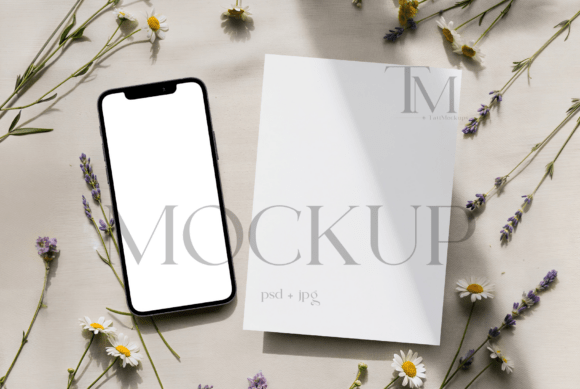
Furthermore, the aesthetic context provided by such mockups plays a crucial role in emotional engagement. Surrounding the central elements with natural field flowers, as seen in this specific template, adds an organic, soft, and inviting atmosphere. This is not merely decorative; it sets the tone for the event or brand being represented. For wedding designers, this rustic yet elegant vibe aligns perfectly with current trends favoring authenticity and natural beauty. It transforms a simple design file into a lifestyle image that resonates with the target audience’s aspirations.
Technical Features and Workflow Efficiency
For professional designers, time is a critical resource. The efficiency of a mockup template is determined by its ease of use and flexibility. High-quality PSD files, such as the one included in this package, utilize smart object layers to streamline the customization process. This technology allows users to insert their designs without manually adjusting perspective, shadows, or lighting effects, which are pre-rendered to maintain photorealism.
The workflow for implementing your graphics is straightforward and intuitive. First, you launch Photoshop and locate the smart object layer designated for the 5x7 card or the smartphone screen. Double-clicking this layer opens a new tab where you can drag and drop your high-resolution design file. Once placed, you adjust the image size to align with the card’s dimensions or the phone’s screen boundaries. After saving the smart object, the main file automatically updates, reflecting your design within the realistic environment. This non-destructive editing process ensures that the original integrity of the mockup remains intact, allowing for endless iterations and variations.
The inclusion of a high-resolution JPG file alongside the PSD offers additional versatility. While the PSD is essential for customization, the JPG can be used for quick previews or as a reference for layout inspiration. Moreover, the high resolution of the final output ensures that the images remain crisp and detailed, suitable for high-density displays on portfolio websites, social media platforms, and even large-format print presentations. This level of quality is vital for maintaining a professional image and demonstrating attention to detail to prospective clients.
Ideal Use Cases for Designers and Businesses
The applications for a 5x7 Invitation and Smartphone Mockup extend beyond individual freelance designers. Marketing agencies, printing companies, and online stationery retailers can leverage this tool to enhance their product listings and promotional materials. For e-commerce businesses, high-quality mockups are known to increase conversion rates by providing customers with a clearer understanding of the product. Instead of relying on abstract descriptions, buyers can visualize the final result, reducing uncertainty and purchase hesitation.
Wedding and event planners also benefit significantly from this resource. When pitching concepts to couples, presenting a mood board that includes realistic renderings of invitations and digital save-the-dates can be the deciding factor in securing a contract. It allows planners to tell a complete story, illustrating how the visual theme will permeate every aspect of the event experience. Similarly, corporate event organizers can use these templates to showcase conference badges, invitation cards, and accompanying mobile apps, demonstrating a polished and coordinated approach to event management.
Educators and students in graphic design programs can also utilize these mockups for portfolio development. Creating hypothetical projects that include both print and digital components demonstrates a well-rounded skill set and an understanding of multi-channel design principles. By incorporating realistic presentations into their portfolios, students can better communicate their design intentions and stand out in a competitive job market.
Considerations for Effective Implementation
While mockups are powerful tools, their effectiveness depends on how they are used. It is essential to select designs that complement the mockup’s aesthetic. For instance, the natural field flowers surrounding the 5x7 Invitation and Smartphone Mockup suggest a soft, organic, and perhaps rustic or bohemian style. Designs that are overly industrial, neon, or starkly minimalist might clash with this background, creating a visual dissonance that detracts from the overall impact. Designers should consider the mood and context of the mockup when choosing which projects to feature.
Lighting and color accuracy are also critical factors. Although smart objects handle much of the integration, designers should still review the final composite to ensure that colors appear consistent with their original intent. Monitor calibration and ambient lighting in the mockup scene can affect perception. Adjusting brightness, contrast, or saturation slightly can help harmonize the inserted design with the surrounding environment, ensuring a seamless blend.
Additionally, respecting the terms of use associated with digital assets is fundamental. As noted in the product details, reselling the mockup itself is prohibited. These tools are intended for incorporating your own creative work into business or personal projects. Understanding these boundaries ensures ethical usage and supports the ecosystem of digital creators who develop these valuable resources.
Enhancing Your Brand with Organic Aesthetics
The trend towards organic and natural aesthetics in design continues to gain momentum. Consumers are increasingly drawn to visuals that evoke warmth, authenticity, and connection to nature. The 5x7 Invitation and Smartphone Mockup capitalizes on this trend by framing the digital and print elements within a bed of natural field flowers. This choice of styling not only enhances the visual appeal but also aligns with broader cultural shifts towards sustainability and mindfulness.
By adopting this aesthetic, designers can position their brands as thoughtful, elegant, and attuned to contemporary tastes. It suggests a level of care and craftsmanship that goes beyond mere functionality. For businesses targeting audiences who value artisanal quality and natural beauty, this type of presentation can be a powerful differentiator. It communicates that the brand understands and appreciates the nuances of lifestyle and design, fostering a deeper connection with potential clients.
Ultimately, the goal of using such a sophisticated mockup is to elevate the perceived value of your work. It transforms a simple design file into a compelling visual story that engages viewers on an emotional level. Whether you are a seasoned professional looking to refresh your portfolio or a newcomer aiming to make a strong first impression, investing in high-quality presentation tools like this one can significantly impact your success. By leveraging the seamless integration of print and digital formats, surrounded by an elegant, organic backdrop, you create a cohesive and memorable presentation that stands out in a crowded marketplace.
Thank you for browsing TatiMockups. By integrating these tools into your workflow, you empower yourself to deliver exceptional visual experiences that resonate with clients and audiences alike. The combination of technical precision, aesthetic sensitivity, and strategic presentation defines the modern designer’s toolkit, enabling creativity to flourish in both digital and physical realms.